
Introduction: Why I Wanted to Visit UofT St. George
The University of Toronto St. George campus is one of those places almost every Canadian high schooler has heard of, whether they are applying there or not. It shows up on every “best universities in Canada” list, it gets mentioned in guidance counselor meetings, and it has a reputation that precedes it before you even set foot on the property.
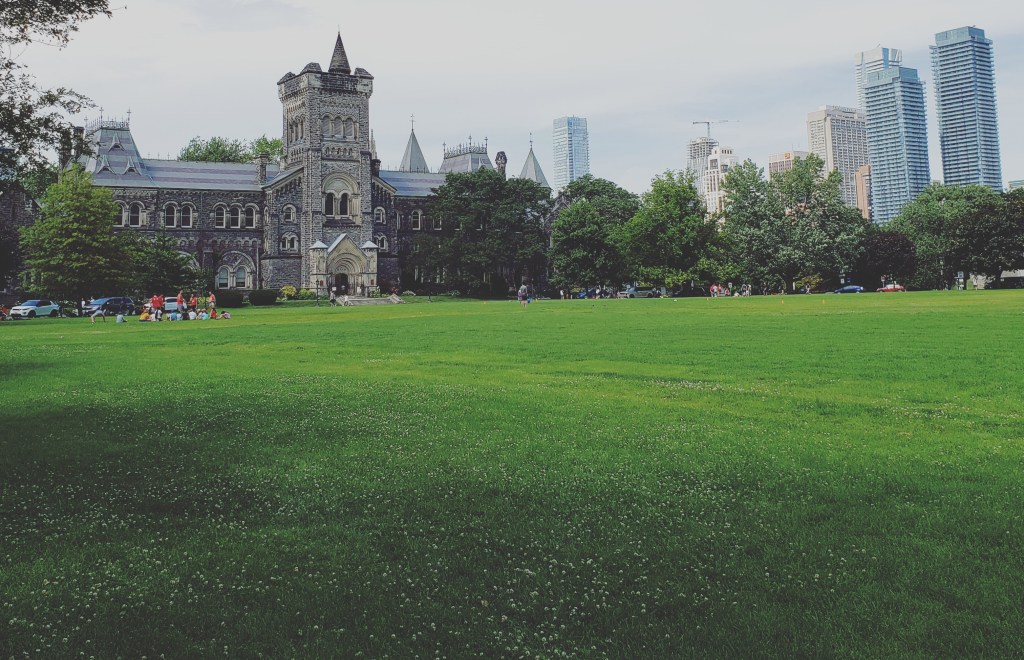
Before visiting, I already had a picture in my head. I knew UofT St. George was one of the most prestigious universities in the country. I knew it sat right in the middle of downtown Toronto, not on the outskirts or in some quiet suburb. I knew it was known for its old, elegant buildings and its long academic history. And I knew that being surrounded by one of the biggest cities in Canada was going to be a huge part of the experience, for better or worse.
Rankings and reputation can tell you a lot about a school. They can tell you about research output, professor credentials, and how competitive admissions are. What they cannot tell you is what it actually feels like to walk across campus on a random Tuesday afternoon, backpack on your shoulder, trying to figure out where your next class is.
So that is the real point of this visit, and this entire series. The question I am trying to answer is not “Is UofT a good university?” Plenty of people have already answered that one, and the answer is generally yes. The question I actually care about, and the one most prospective students are quietly asking themselves, is simpler and much more personal:
Would I actually enjoy spending my undergraduate years here?
First Impressions: A Campus Unlike Most Others
Walking onto St. George for the first time is a different experience than walking onto most Canadian university campuses. A lot of schools give you a clear sense of arrival. You cross some kind of threshold, maybe a gate or a big open quad, and suddenly you know you are “on campus.” St. George does not really work that way, and that becomes obvious almost immediately.
The first thing that stood out to me was the architecture. There is a noticeable mix of old and new here. You will be walking past a stone building that looks like it has been standing since the early 1900s, and then a block later you are next to a modern glass structure that would not look out of place in a downtown office district. It is a strange but interesting contrast, and it gives the campus a visual identity that a lot of newer, more uniform campuses simply do not have.
The buildings have a character that many newer campuses do not have. Some of them look worn in a way that feels earned rather than neglected, like they have absorbed decades of students walking the same halls. Even without knowing the history of a specific building, you get the sense that a lot has happened inside of it. The campus feels like it has been shaped by generations of students before you, and that is not something you can fake with a big marketing budget or a fresh coat of paint.
At the same time, I want to be honest that this first impression is not all charm. Because the campus blends so directly into the surrounding city blocks, it is not always obvious where “campus” ends and “downtown Toronto” begins. For someone visiting for the first time without a map, that can be a little disorienting.
The Beauty of St. George: The Historic Campus Experience
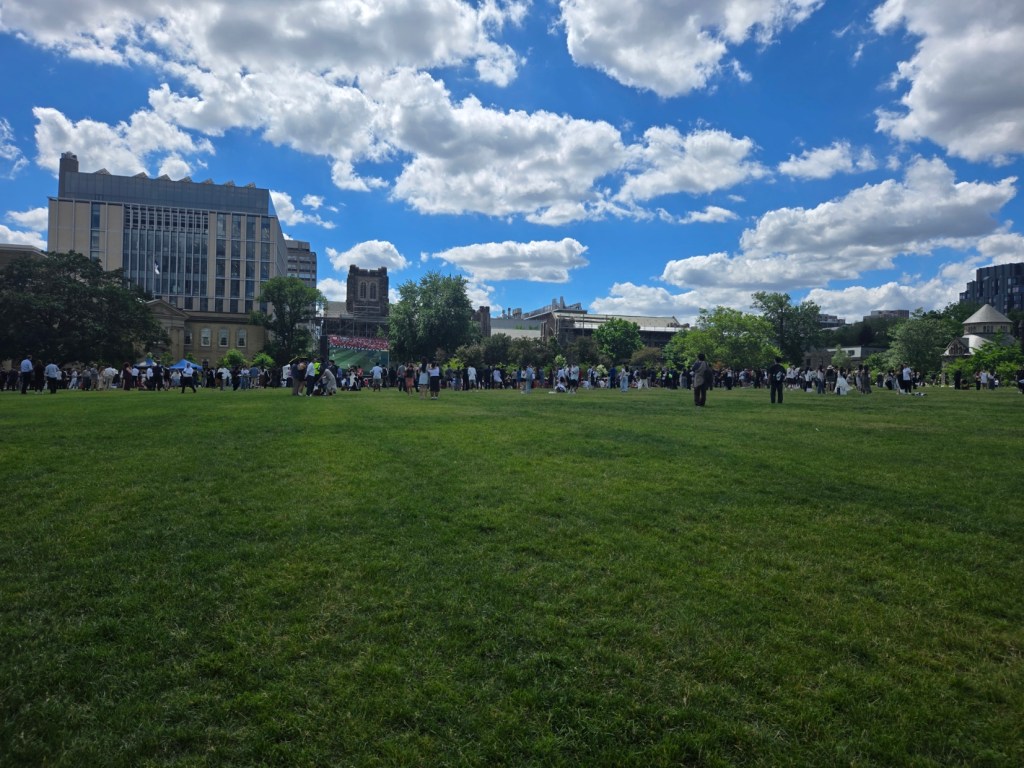
If there is one thing UofT St. George does better than almost any other Canadian university, it is atmosphere rooted in history. This section is really about the physical experience of being on campus, separate from academics or logistics.
The older colleges, like University College, Trinity, and Victoria, are genuinely beautiful. Old stone buildings with detailed carvings, arched doorways, and ivy creeping up the walls give parts of the campus a look that feels closer to a European university than a typical North American one. Walking through King’s College Circle, with its open green space surrounded by historic buildings, is probably the closest thing St. George has to a postcard moment.
There are quiet courtyards tucked behind buildings that most people walking down the main streets would never notice. Some of the older libraries have reading rooms with high ceilings, wooden shelves, and that particular kind of quiet that makes you want to lower your voice even if no one told you to. The pathways connecting different parts of campus wind past gardens, benches, and older architecture that gives even a short walk to class a bit more character than just crossing a parking lot.
This kind of environment matters more than people expect. A lot of university life happens in the small, unremarkable moments, walking to class, grabbing a coffee, waiting for a friend outside a building. When those moments happen in a space that actually looks and feels interesting, they tend to stick with you differently than when they happen in a generic hallway or a plain courtyard.
For students who are drawn to that traditional, slightly old fashioned university aesthetic, the kind you see in movies about old universities, St. George genuinely delivers. It is one of the few campuses in Canada where the architecture alone can be a real selling point.
The Biggest Advantage: Location, Location, Location
If the historic architecture is what makes St. George visually memorable, the location is what makes it practically valuable. This is probably the single biggest advantage the campus has over most other Canadian universities, and it is worth breaking down into a couple of parts.
Convenience
Being located directly in downtown Toronto means the campus is extremely easy to get to, no matter where you are coming from. Multiple subway lines run close to or through campus, so commuting from other parts of the city is straightforward. Students who live at home do not have to choose between staying close to family and attending a top tier school. Students coming from other cities also benefit from being connected to a major transit hub, with easy access to trains, buses, and the airport.
This also means the campus does not feel isolated in the way some university towns can. You are not stuck in a bubble where the university is the only thing around for miles. If you need something, whether that is a pharmacy, a grocery store, or just a change of scenery, it is usually a short walk or transit ride away.
Everything Around You
The other side of the location advantage is everything that exists just outside the campus boundaries. Within a few blocks of St. George, you have access to restaurants covering almost every cuisine imaginable, cafés for studying or catching up with friends, shops for basically anything you need, and grocery stores for the more practical side of student life.
Beyond the essentials, there is also a huge range of entertainment and culture nearby. Museums, theaters, parks, and event spaces are all within easy reach. University life at St. George does not really stop at the edge of campus, because the city itself becomes part of the day to day experience. For students who like having options and enjoy exploring a new part of the city whenever they have free time, this is a huge plus.
The Downtown Campus Feeling: The Biggest Difference
This is probably the most important section of this whole tour, because it is the thing that will most affect whether someone feels at home here or not.
One of the first things I noticed, and honestly the thing that stuck with me the most after the visit, is that UofT St. George does not feel like a traditional, self contained university campus. It feels like the university has been woven directly into the city rather than existing as its own separate space.
The campus is not separated from Toronto. It exists within Toronto. Streets cut directly through university property. Public buses and cars pass by academic buildings. Businesses that have nothing to do with the university sit right next to lecture halls and libraries. There are always people around, but not all of them are students. Some are office workers, some are tourists, some are just Torontonians going about their day.
This creates an environment that feels broad, spread out, and constantly active. There is rarely a moment where the campus feels quiet or still, because it is plugged directly into one of the busiest parts of one of the busiest cities in the country.
To be clear, this is not automatically a bad thing. It creates a genuinely unique university experience that you will not find at most other Canadian schools. But it is also not something that will appeal to everyone, and it is worth being honest about that upfront rather than glossing over it.
Does It Feel Like a Traditional University Campus?
If you asked most people to picture a “university campus” in their head, they would probably imagine something with a clear entrance, a central student area where everyone naturally gathers, and a general feeling of being inside one cohesive community. A space that feels somewhat enclosed and separate from the outside world.
St. George does not really match that picture. There is no single moment where you feel like you have “entered” the university. There is no one central hub where the entire student body naturally overlaps throughout the day. Instead, the experience feels more like moving through a series of connected pockets within a larger city.
This can make the campus feel less like a standalone university and more like a university that has been integrated into a major urban environment. Some students find this exciting. It means constant access to a huge city, more independence, and a sense that your university experience extends far beyond just classes and campus events.
Other students, especially those who want a stronger sense of belonging to one specific place, may find it harder to feel connected to a single, unified campus community. It can take more effort to find “your people” and your spots when the environment is this spread out.
Neither of these reactions is wrong, and neither experience is objectively better. They simply create very different day to day lifestyles, and knowing which one you are looking for matters more than most prospective students realize before they visit.
Could I Picture Myself Studying Here?
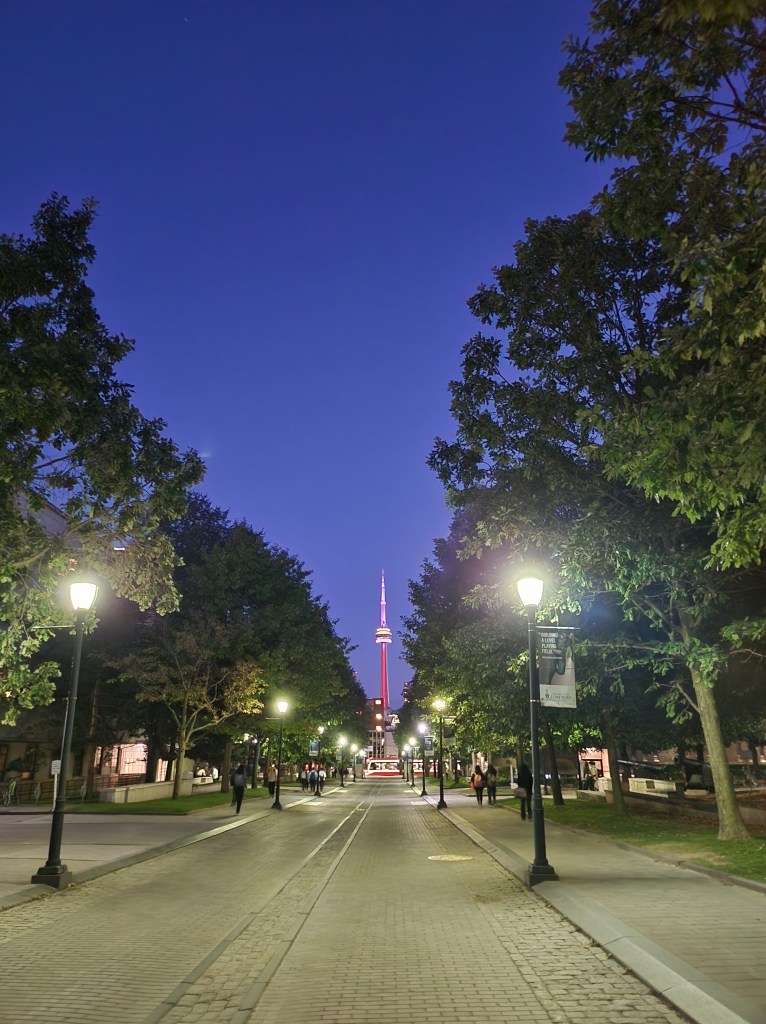
This is the part where I try to actually put myself in the shoes of a student living this experience day to day, rather than just observing it as a visitor.
I tried to imagine what a normal day would look like. Walking to a lecture that might be a fifteen minute walk across several city blocks rather than a five minute walk across a quad. Finding a quiet spot to study between classes, whether that is a library, a café, or a bench in one of the courtyards. Grabbing food from one of the countless options nearby instead of relying only on a dining hall. Meeting up with friends somewhere that might not even technically be on campus property. Spending an evening exploring a part of Toronto I had never been to before, just because it happened to be nearby.
Some of that genuinely sounds appealing. The idea of having an entire city as an extension of your campus is exciting, especially for someone who likes variety and does not want their world to feel small. But I also had to ask myself some more grounded questions. Would I actually enjoy having the city right outside my classroom every single day, or would I sometimes want a quieter, more contained environment to retreat to? Would I feel comfortable navigating an area this large and this busy on a daily basis, especially in first year when everything is already new?
Honestly, the answer depends heavily on personality, and I think that is the most accurate conclusion I can offer here. This is not a campus that works the same way for everyone.
Where Would Students Spend Their Time?
Because the campus does not have one obvious central gathering spot, student life here seems to be more about creating your own routine rather than following an established one.
Libraries are an obvious anchor point, and there are several to choose from, each with a slightly different atmosphere. Cafés, both on campus and just outside its edges, seem to function as informal study spaces and meeting points. The green spaces, like King’s College Circle, offer a place to sit outside when the weather cooperates, though Toronto winters will limit how often that is realistic. Nearby restaurants double as casual hangout spots, and various student buildings and college specific spaces offer smaller, more intimate common areas for students affiliated with a particular college.
What struck me is that student life here seems less about everyone converging on one central quad and more about each student, or each friend group, finding their own small set of go to spots scattered across a wider area. That can be a genuinely nice thing once you settle in, but it does mean the sense of community takes a bit more intention to build compared to campuses where everyone naturally overlaps in the same few locations.
Transportation and Daily Life
Practicality matters a lot when you are talking about four years of daily life, not just a weekend visit, so it is worth spending some real time on this.
Transit access is genuinely one of St. George’s strongest features. Being connected to multiple subway lines means most parts of the Greater Toronto Area are reachable without too much hassle. Walking around campus itself is straightforward once you get used to the layout, even if that layout takes a little longer to learn than a more compact campus would.
Because the university is embedded in the city, getting around does involve dealing with regular city conditions, sidewalks shared with non students, traffic at crosswalks, and the general pace of downtown Toronto. This is not a complaint so much as an observation. It simply means the campus experience is closer to living in a city than living in a traditional university town, and students spend four years navigating that reality every single day, not just during a one time visit.
Who Would Love UofT St. George?
Based on everything I observed, certain types of students seem like a natural fit here.
Students who genuinely love city environments and thrive on having constant activity around them will likely feel energized rather than overwhelmed by St. George. Students who value independence and do not need a tightly enclosed community to feel comfortable will probably enjoy the freedom this setup offers. Anyone who likes having endless options nearby, whether that is food, entertainment, or just new places to explore, will find a lot to appreciate here. Students who are drawn to historic architecture and traditional academic aesthetics will genuinely enjoy the visual experience of the older parts of campus. And students who specifically want access to a major city as part of their university years, not just their degree, will likely see this as one of the biggest selling points rather than a drawback.
Who Might Prefer Somewhere Else?
At the same time, it would not be honest to pretend this environment works for everyone, so it is worth being clear about who might feel differently.
Students who prefer a smaller, more intimate campus where they can recognize familiar faces easily might find St. George overwhelming at first. Those who want a quieter, calmer daily environment may find the constant activity of downtown Toronto tiring rather than exciting. Students who are drawn to a more traditional university atmosphere, with a clear sense of one unified campus community, might feel like something is missing here. And anyone who values a strong, obvious separation between “campus life” and “city life” may struggle with how blended the two are at St. George.
Choosing a university is not only about academics or reputation. The environment you live in every single day for four years matters just as much, and it is worth being honest with yourself about which type of environment actually suits you.
What Surprised Me Most
A few things genuinely surprised me during this visit, even with the expectations I walked in with.
I was surprised by just how beautiful parts of the campus actually were in person, beyond what photos usually capture. I was surprised by how much visible history was present in the older buildings, and how that history is not just background, it actually shapes the feel of the place. I was surprised by how convenient the location truly is once you experience it firsthand, rather than just reading about it. And I was surprised by how different the overall campus experience felt compared to more traditional university layouts, even though I had been told in advance that it would feel different.
None of these surprises were negative. They just reinforced how much a campus visit can shift your understanding of a school compared to reading about it online.
Final Thoughts: Would I Choose UofT St. George?
After spending real time walking around, my overall impression is that UofT St. George has a lot of qualities that make it an incredible place to study. The campus is genuinely beautiful in a way that photos do not fully capture. The historic atmosphere gives it a sense of identity that a lot of newer campuses lack. The location is one of the strongest advantages any Canadian university campus can offer, and the transportation convenience makes daily life manageable even for students commuting from elsewhere in the city. On top of that, the opportunities available simply by being in downtown Toronto are hard to match.
At the same time, its biggest strength is also what makes it different from what many students expect. This is a university that exists inside one of Canada’s largest cities, not one that sits apart from it. For some students, that creates an exciting, unforgettable four years. For others, it may feel less like the classic university campus they had originally imagined when picturing their undergraduate experience.
In the end, the most important question is not whether this campus is objectively the best one out there. It is whether this particular environment fits the kind of university experience you actually want to have. St. George is not for everyone, but for the right kind of student, it might be exactly right.
 Motieve
Leave a comment