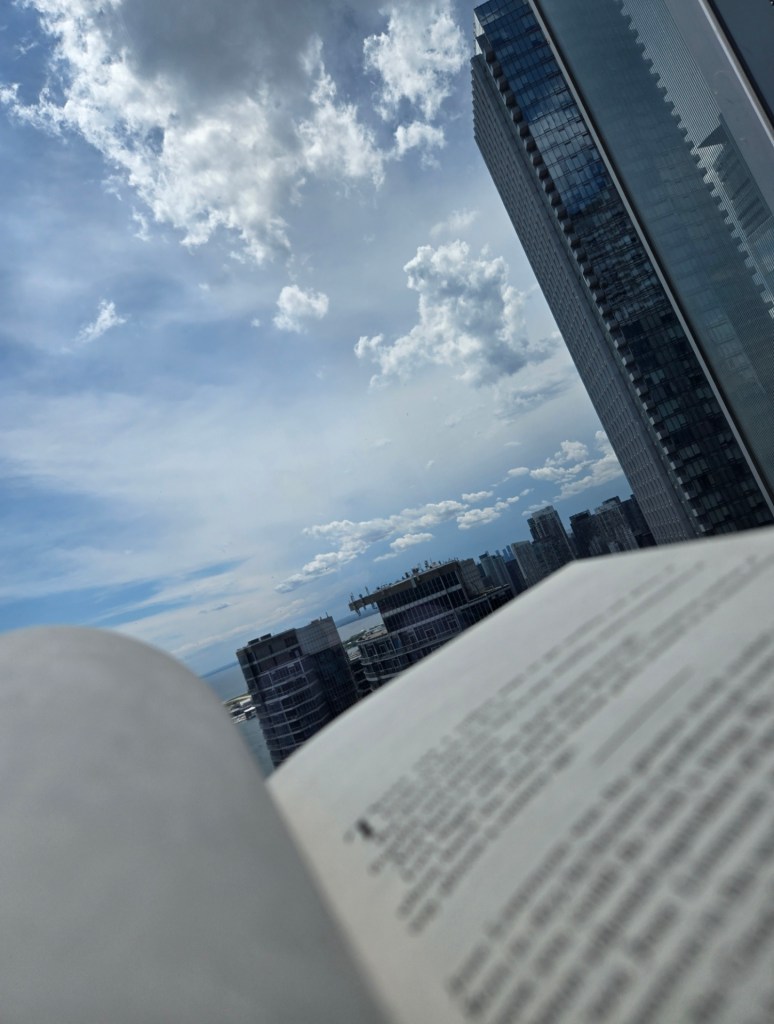
For most of high school, university applications existed as a kind of distant myth. Older students spoke about them in hushed, dramatic tones. Teachers mentioned them the way you’d mention a storm on the horizon, something you should prepare for but couldn’t quite picture. Everyone talked about Grade 12 applications as this singular, defining moment, and yet almost nobody explained what the process actually looked like from the inside.
Now that I’m on the other side of it, sitting in my first year of Health Sciences at McMaster, I can say the process was demanding. It asked a lot of my time, my patience, and occasionally my sanity. But the lessons that mattered most weren’t the ones I expected going in. I thought the hardest part would be the applications themselves. It turned out the harder, more valuable lessons were about how I managed my time, my mindset, and my relationships throughout that year.
This isn’t a step-by-step guide to getting into a competitive program, and it isn’t a list of generic tips you’ve already read a dozen times. It’s the collection of things I genuinely wish someone had told me before Grade 12 started. Some of it is practical. Some of it is more personal. All of it is what I’ve come to believe matters, now that I have the distance to actually see the year clearly.
Your Grades Matter More Than Anything Else
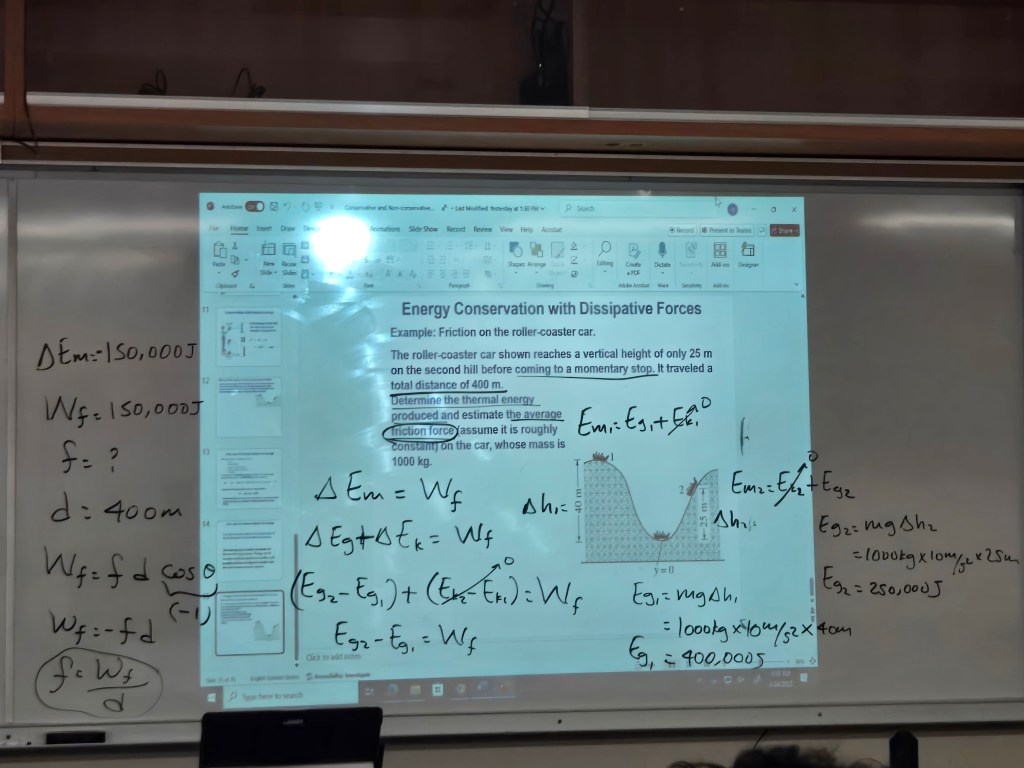
I want to start here because, if I’m being honest, this is the section I would have wanted to read most as a Grade 11 student.
Grades were, without question, the single largest factor in my admissions outcomes. Not extracurriculars, not essays, not interviews. Grades. Programs like Health Sciences often admit students with averages in the low-to-mid nineties, and that number isn’t arbitrary. It reflects how competitive the applicant pool has become, and it means that a single weak semester can meaningfully narrow your options before you’ve even applied.
What surprised me most was how much consistency mattered compared to sudden improvement. I assumed, somewhat naively, that if I struggled in September, I could simply work harder in the spring and even things out. That’s not really how Grade 12 works. Final grades are often calculated using performance across the entire semester, and many programs look specifically at the trajectory of your marks, not just the final number. A slow start is possible to recover from, but it’s far easier to maintain strong performance from day one than to claw your way back later.
This is why every assignment, every quiz, and every test started to feel like it mattered in a way it hadn’t in earlier grades. Not because any single mark defines you, but because they accumulate. I remember treating a ten percent quiz in October as low stakes, only to realize months later how much those smaller assessments had shaped my overall average by the time report cards were finalized.
The habits that helped me most were unglamorous. I started asking questions the moment I didn’t understand something, instead of waiting until confusion piled up into a genuine knowledge gap. I went to extra help sessions even when I felt slightly embarrassed to be there, and I never once regretted it. I kept my notes organized by unit, so studying for cumulative tests didn’t mean scrambling through months of scattered pages. And I tried, with varying degrees of success, to avoid procrastination by breaking larger assignments into smaller pieces I could chip away at over days rather than hours.
None of this means grades should define your sense of self-worth. They shouldn’t, and I say that as someone who occasionally let them do exactly that. But I’d be doing you a disservice if I pretended grades weren’t the foundation everything else was built on. If I could go back and speak to my Grade 11 self, I would tell her to take the last two years of high school seriously from the very first week, not because a single test defines her future, but because consistency compounds in ways that are hard to see until you’re looking back at the full picture.
Extracurricular Activities Still Matter
Grades may open the door, but extracurriculars shape the version of you that walks through it.
I spent time volunteering at a local hospital, played on a school sports team, participated in a leadership program, and picked up a small independent research project in my final year, mostly because it genuinely interested me. Looking back, none of these things were chosen strategically to impress an admissions committee. They were chosen because I liked them, and that distinction turned out to matter more than I initially understood.
Universities aren’t looking for a long list of loosely connected activities. They’re looking for evidence of genuine commitment, growth, and involvement over time. A student who volunteered consistently for two years and took on more responsibility as they went will almost always stand out more than a student who joined ten clubs in September and quietly disappeared from all of them by November. Depth reads as authenticity. Breadth, when it isn’t backed by real engagement, tends to read as exactly what it is.
This became especially clear when I had to write about my experiences in supplementary applications. The activities I felt most genuinely connected to were the ones I could write about with real detail and real reflection. I didn’t have to invent meaning or stretch for significance, because the meaning was already there. That’s a strange kind of gift, in hindsight. Doing things you actually care about doesn’t just make you a better applicant. It makes the entire application process considerably less exhausting, because you’re not performing enthusiasm you don’t feel.
Beyond the admissions angle, these activities quietly built skills I didn’t fully appreciate at the time. Leading a club taught me how to navigate disagreement. Volunteering taught me how to communicate with people very different from myself. None of that shows up neatly on a transcript, but all of it shaped who I became well before I ever set foot on a university campus.
Start Earlier Than You Think
Grade 12 moves at a strange speed. It feels slow in the moment, especially during the long stretch of September and October, and then suddenly it’s February and you’re realizing how little time is actually left before deadlines close.
I started researching programs the summer before Grade 12, and it remains one of the better decisions I made that year. I looked into admission averages, prerequisite courses, and the specific requirements of programs I was interested in, long before the applications themselves opened. I learned which schools required supplementary applications and which didn’t, which was something I genuinely hadn’t understood until I started digging into it.
I also built a simple spreadsheet with every deadline I needed to track: application due dates, supplementary submission windows, scholarship deadlines, and financial aid dates. It sounds almost too basic to mention, but it was one of the most useful tools I had all year, mostly because it removed the mental load of trying to remember everything at once.
Starting early doesn’t mean starting stressed. It means giving yourself breathing room. When you’re not racing a deadline you just discovered a week ago, you have the mental space to actually think carefully about your responses instead of writing under pressure. That difference is more significant than it sounds.
The Application Process Was Less Intimidating Than Expected

I remember opening OUAC for the first time and feeling a genuine wave of anxiety, as though I was about to navigate something enormously complicated. In reality, the platform itself was fairly straightforward once I understood the layout, and most of my early confusion came from simply not knowing what to expect rather than the process being difficult.
Uploading documents, checking admission portals, and submitting applications all turned out to be far more manageable than the mythology around them suggested. What made the biggest difference was the support available, which I underestimated significantly before actually needing it. My guidance counsellor walked me through requirements I hadn’t fully understood, teachers answered questions about references without hesitation, and university websites, once I actually read them carefully, explained most of what I needed to know.
If I could offer one piece of advice here, it would be this: ask questions the moment you feel uncertain, rather than sitting with confusion and hoping it resolves itself. Nearly every question I eventually asked had already been answered somewhere, either by a counsellor, a teacher, or a university’s own website. The stress I felt in the weeks leading up to submitting my applications was almost entirely a product of uncertainty, not actual difficulty. Once I understood the process, most of that anxiety disappeared.
Supplementary Applications
Supplementary applications, whether written responses, personal statements, video interviews, or in-person interviews, ask you to do something genuinely difficult: represent yourself honestly in a format that feels inherently artificial.
The instinct many students have, myself included at first, is to try to guess what admissions committees want to hear and shape your answers around that guess. I found this approach almost always backfired, if only because it produced writing that felt hollow, even to me. The responses that felt strongest, both to write and presumably to read, were the ones grounded in experiences I actually cared about and could reflect on with some depth.
Preparation mattered enormously, but not in the way I initially assumed. It wasn’t about memorizing polished answers. It was about genuinely reflecting on my own experiences beforehand, so that when a prompt asked me to describe a challenge I’d overcome or a value I held strongly, I wasn’t scrambling to invent something on the spot. I spent time journaling about meaningful moments from high school before I ever sat down to write a single supplementary response, and that groundwork made the actual writing process significantly smoother.
For interviews, I practiced out loud, not to memorize scripts, but to get comfortable hearing my own voice discuss my experiences. Confidence in an interview setting rarely comes from having the perfect answer prepared. It comes from having thought deeply enough about your own story that you can speak about it naturally, even when the specific question catches you off guard.
Stop Comparing Yourself
Comparison during Grade 12 is almost unavoidable, and I say that as someone who spent more energy on it than I’d like to admit.
Someone in your friend group gets an early acceptance, and suddenly your own timeline feels slower by comparison. Someone mentions their average in passing, and you find yourself mentally recalculating your own. Social media fills with acceptance announcements throughout the winter, and online forums circulate rumours about admission cutoffs that are rarely based on anything concrete.
I want to be direct about this: comparison during this period creates a kind of anxiety that serves no real purpose. Every applicant has a different combination of strengths, circumstances, and experiences, and measuring your own path against someone else’s rarely produces anything useful. What helped me most was redirecting that mental energy toward my own progress. Was I improving in the areas I could actually control? Was I preparing thoughtfully for the applications ahead of me? Those questions were far more productive than anything comparison could offer.
It’s worth remembering that you’re seeing a curated slice of everyone else’s process, not the full picture. The acceptance someone announces online doesn’t show you the rejections they might have received elsewhere, or the uncertainty they felt while waiting. Nobody’s Grade 12 year is as smooth as it appears from the outside.
Protect Your Mental Well-Being
I don’t think I can overstate how emotionally demanding this year became at certain points, and I think it does students a disservice to pretend otherwise.
Academic pressure built steadily throughout the fall. The waiting period after submitting applications brought its own particular kind of anxiety, one that doesn’t respond well to logic, because there’s genuinely nothing productive to do while you wait. And underlying all of it was a quiet fear of rejection that I didn’t always acknowledge, even to myself.
What helped, in ways I didn’t fully appreciate until afterward, were the basics. Consistent sleep made a measurable difference in how I handled stress day to day. Regular exercise, even just walking, gave me a way to release tension that had nowhere else to go. Spending time with family and friends reminded me, gently, that my worth wasn’t contingent on an admissions decision months away. Taking breaks without guilt was harder than it sounds, but essential.
I also learned that speaking with a school counsellor when things felt overwhelming wasn’t a sign of weakness. It was one of the more mature decisions I made that year. Taking care of yourself during this period doesn’t detract from your academic performance. It supports it. Burnout doesn’t make you more competitive. It makes you less capable of doing your best work when it matters most.
Above all, I’d want any student reading this to understand that a single acceptance or rejection does not determine your future. It feels enormous in the moment, and I understand why. But it is one data point in a much longer story, not the whole story itself.
Do Not Rush Through Your Final Year
This might be the section I feel most strongly about, and it’s the one I think gets overlooked most often in the rush toward applications.
Grade 12 isn’t only about university. It’s also the final chapter of a specific version of your life, one that includes people, routines, and moments you won’t get back once they’re gone. Lunches with the same group of friends you’ve known for years. School events you’ve attended since Grade 9. Spirit weeks, concerts, sports games, the particular chaos of a graduation ceremony you spend months anticipating and then somehow blink through. Teachers who shaped how you think, whom you may not see again after June. The specific, unremarkable act of walking through familiar hallways, not realizing it’s one of the last times you’ll do it.
I found, somewhat unexpectedly, that these moments disappeared faster than I anticipated. I spent so much of the fall focused on applications that I nearly let some of it slip by without fully noticing. It was only in the spring, once decisions started coming in and the pressure eased slightly, that I began to appreciate how quickly the year was actually moving.
If I could offer one piece of advice here, it would be this: take the photos. Spend the time with your friends, even when you feel like you should be studying instead. Attend the events, even the ones that feel slightly silly in the moment. Thank the teachers who made a difference, while you still have the chance to tell them directly. University will come soon enough, and it deserves your full attention when it arrives. But don’t spend your final year of high school so focused on what’s next that you forget to actually live in it.
Accept That Rejection Is Part of the Process
Competitive admissions inevitably involve some degree of disappointment, and I think students deserve to hear that plainly rather than have it softened into something unrecognizable.
Not everyone gets into their first-choice program, and that includes students with strong grades, meaningful extracurriculars, and thoughtful applications. Rejection in this context doesn’t reflect your intelligence, your worth, or your future potential. It often reflects the simple reality that competitive programs receive far more qualified applicants than they have spaces to offer.
I’ve met people who ended up thriving in programs they hadn’t originally planned for, and others who took entirely different academic paths after an initial rejection reshaped their direction. Success, as far as I can tell, depends far more on what you do once you arrive somewhere than on which specific door you walked through to get there. That’s not meant as a consolation prize. It’s simply what I’ve observed to be true.
If you receive a rejection this year, I’d encourage you to let yourself feel disappointed, because that’s a reasonable response. But try not to let it convince you of something false about your own capability. One outcome, however significant it feels in the moment, is not the full measure of what you’re capable of building.
Lessons I Wish Someone Had Shared Earlier
A few practical lessons, gathered from a year of learning most of them the hard way.
- Apply for scholarships early. Many scholarship deadlines arrive earlier than students expect, sometimes well before regular admission decisions. Missing them because you weren’t tracking the dates is an entirely avoidable loss.
- Keep important documents organized. Transcripts, reference letters, proof of enrollment. Having everything in one accessible folder saved me significant stress whenever a university requested something on short notice.
- Save copies of every application. I saved PDFs of every supplementary response I submitted, which turned out to be useful when preparing for interviews later, since I could revisit exactly what I’d written.
- Understand financial aid before you need it. Financial aid and OSAP timelines can be confusing, and starting that research early gave me far more clarity than trying to piece it together under deadline pressure.
- Ask questions, even ones that feel obvious. Nearly every question I hesitated to ask turned out to have a simple answer that someone was glad to provide.
- Build healthy habits before Grade 12 begins. Sleep schedules, study routines, and stress management strategies are far easier to establish before the pressure ramps up than during it.
- Celebrate progress, not just outcomes. Submitting a strong application, improving a difficult grade, or simply getting through a hard week all deserve acknowledgment, independent of the final admissions result.
- Stay curious about your own interests. The clearest applications came from students who understood why they wanted a particular program, not just that they wanted it.
- Trust yourself!!! This is easier to say than to practice, but the students I know who fared best throughout this process were the ones who trusted their own judgment, even when the process felt uncertain.

 MOTIEVE
Leave a comment